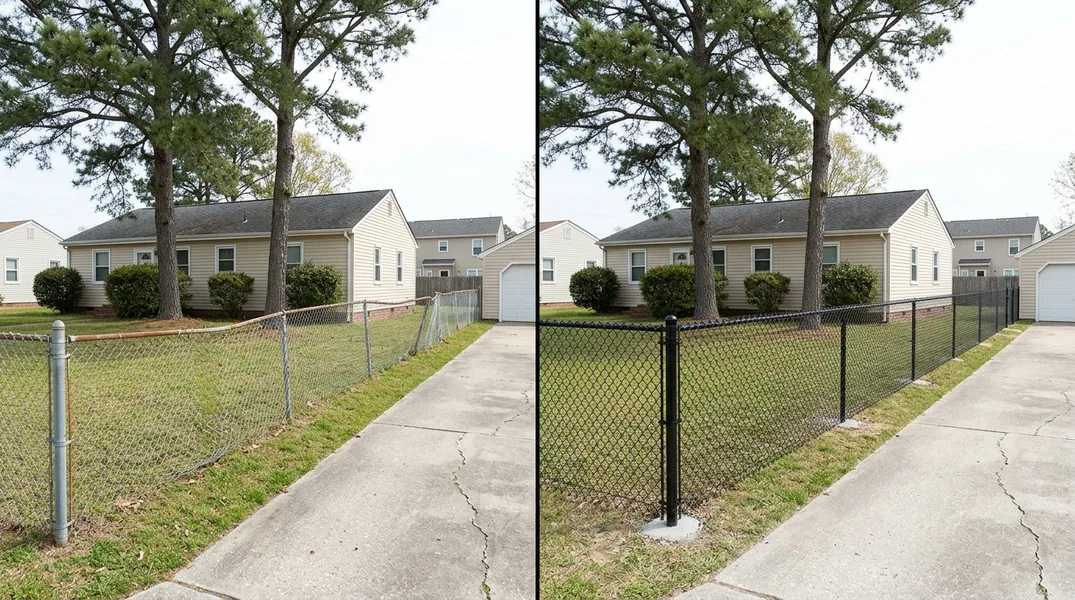
The Salt Air Problem: Why Coastal Fences Fail So Quickly
Living near the Atlantic Ocean comes with stunning views and refreshing breezes, but it also comes with a hidden threat to your property. Virginia Beach homeowners face a unique challenge that inland residents never have to worry about: salt air corrosion. The salt spray that drifts inland from the ocean is one of the most destructive forces your fence will ever encounter, and it works silently and relentlessly.
Salt air corrodes metal, accelerates wood rot, and breaks down protective finishes far faster than regular weather. The problem is especially severe within the first mile of the coast, but salt air can travel several miles inland, affecting properties throughout the Virginia Beach area. A fence that might last 20 years in a dry climate can deteriorate to the point of needing replacement in just 5 to 10 years if it is not built from the right materials and installed with proper coastal protection in mind.
Why Traditional Wood Fences Struggle in Coastal Environments
Wood & Privacy Fence Installation remains popular among homeowners because of its natural beauty and timeless appeal. However, wood is particularly vulnerable to the ravages of salt air. When salt spray contacts wood, it accelerates moisture absorption and prevents the wood from drying properly. This creates the perfect environment for fungal growth, wood rot, and insect damage. Even pressure-treated wood, which has been chemically treated to resist rot and insects, will break down faster in a coastal setting than it would in an inland location.
The protective stain or sealant that homeowners apply to wooden fences also deteriorates much more quickly in salt air environments. You may find yourself resealing or restaining your fence every 18 to 24 months instead of every three to five years. Over time, the cost of maintenance, combined with the accelerated replacement timeline, makes traditional wood fencing a less economical choice for properties exposed to significant salt spray. Many Virginia Beach homeowners eventually decide to replace their wood fences with more durable alternatives after experiencing repeated repairs and deterioration.
Aluminum & Ornamental Iron Fencing: A Coastal-Friendly Alternative
Aluminum & Ornamental Iron Fencing offers a compelling solution for homeowners dealing with salt air fence corrosion. Aluminum does not rust in the traditional sense because it naturally forms a protective oxide layer when exposed to air. This layer actually shields the underlying metal from further corrosion, making aluminum inherently resistant to salt spray. Unlike steel, which will rust aggressively when exposed to salt water, aluminum remains structurally sound and visually appealing for decades with minimal maintenance.
The aesthetic advantages of aluminum fencing are significant as well. It can be powder-coated in virtually any color, giving you the design flexibility to match your home's exterior and landscaping. Aluminum fencing is lightweight, which means installation is faster and less labor-intensive than some alternatives. It also requires virtually no maintenance beyond an occasional rinse with fresh water to remove salt residue. For homeowners who want a fence that will stand up to coastal conditions without becoming a maintenance burden, aluminum fencing represents an excellent long-term investment.
Vinyl & PVC Fence Installation: Durability Without the Upkeep
Vinyl & PVC Fence Installation has emerged as another strong option for coastal properties. Vinyl is inherently resistant to salt spray because it does not corrode, rot, or absorb moisture. Unlike wood, vinyl will not warp, split, or splinter, and unlike metal, it will not rust or require painting. This makes vinyl an exceptionally low-maintenance choice for homeowners who want to install a fence and forget about it.
Vinyl fencing does come with a higher upfront cost compared to wood, but when you factor in the near-zero maintenance requirements and the extended lifespan, the total cost of ownership becomes very competitive. Modern vinyl formulations are also much more resistant to UV fading than they were a decade ago, so your fence will maintain its color and appearance for many years. The main consideration with vinyl is that it can become brittle in extremely cold temperatures, but this is rarely a concern in the moderate coastal climate of Virginia Beach.
Chain Link Fence Installation: Budget-Friendly but Requires Care
Chain Link Fence Installation is often chosen by homeowners looking for an economical fencing solution. Standard galvanized chain link can handle moderate salt exposure, but it is not ideal for properties very close to the coast. The galvanized coating will eventually break down under sustained salt spray exposure, leading to rust and deterioration of the metal wires. However, vinyl-coated chain link offers better protection. The vinyl coating provides a barrier between the steel and the salt air, extending the fence's lifespan considerably.
If you choose chain link fencing in a coastal area, investing in a vinyl-coated option is strongly recommended. You will still need to rinse the fence periodically with fresh water to remove accumulated salt, but this is a relatively simple maintenance task. Chain link fencing is practical for properties where security and visibility are priorities, and the vinyl-coated variety can serve you well if you are willing to perform basic seasonal maintenance.
Coastal Fence Material Cost in Virginia Beach: What to Budget
Understanding the pricing for different coastal fence materials will help you make the best decision for your property and budget. Wood fencing typically has the lowest initial cost, which is why it remains attractive to many homeowners. However, when you add in the accelerated maintenance, frequent resealing, and earlier replacement timeline required in coastal environments, the true cost becomes much higher. Aluminum fencing costs more upfront than wood but offers decades of durability with virtually no maintenance, making it a smart investment for long-term value.
Vinyl fencing sits in the middle to upper range of upfront costs, but like aluminum, it requires minimal maintenance over its lifespan. Chain link fencing offers the lowest cost option, especially if you choose standard galvanized rather than vinyl-coated. However, vinyl-coated chain link, which is recommended for coastal areas, narrows the price gap considerably. The best approach is to consider not just the installation cost, but the total cost of ownership over 15 to 20 years. Virginia Beach Fence Company can provide a detailed free estimate for any of these options, allowing you to compare both initial investment and long-term value before making your decision.
Getting Professional Guidance: When to Call a Coastal Fence Specialist
Choosing the right fence material for a coastal property is not a decision to make lightly. The unique demands of salt air corrosion mean that what works well inland may fail prematurely in your location. A professional fence contractor with experience in coastal installations understands these challenges and can recommend materials and installation techniques specifically suited to your property's exposure level and your personal preferences.
Virginia Beach Fence Company has been serving homeowners throughout the region and understands exactly what it takes to build a fence that will stand up to coastal conditions. Whether you are considering Aluminum & Ornamental Iron Fencing, vinyl, or exploring other options, our team can assess your property, discuss your goals, and provide honest recommendations based on years of coastal installation experience. We encourage you to reach out for a free estimate or call us at (757) 563-1304 to discuss your fencing project. A few minutes of conversation now can save you years of frustration and thousands of dollars in premature repairs and replacements.
Looking for a professional tree service in Virginia Beach? Virginia Beach Fence Company responds fast for all your fence needs.
Get a Free Quote