Why Coastal Living Demands the Right Fence Material
If you live in Virginia Beach, you already know that proximity to the ocean comes with unique challenges. Salt air, high humidity, and intense UV exposure can degrade fence materials faster than inland homeowners might expect. Choosing the wrong fence material doesn't just mean replacing it sooner, it means watching your investment corrode, fade, or warp year after year.
The good news is that you have options. Wood & Privacy Fence Installation, Vinyl & PVC Fence Installation, and Aluminum & Ornamental Iron Fencing each bring different strengths and weaknesses to coastal environments. Understanding how each material performs in salt air, what maintenance they require, and how they compare on pricing will help you make an informed decision that protects both your property and your wallet.
Wood Fencing in Salt Air: Beauty Comes with Responsibility
There's a reason wood fences remain popular in coastal communities. The natural warmth, aesthetic appeal, and traditional charm of a wood fence are unmatched by synthetic alternatives. Many homeowners in Virginia Beach choose wood for privacy fencing because it blends seamlessly with residential landscapes and offers excellent sound dampening. However, wood fence salt air compatibility requires serious consideration.
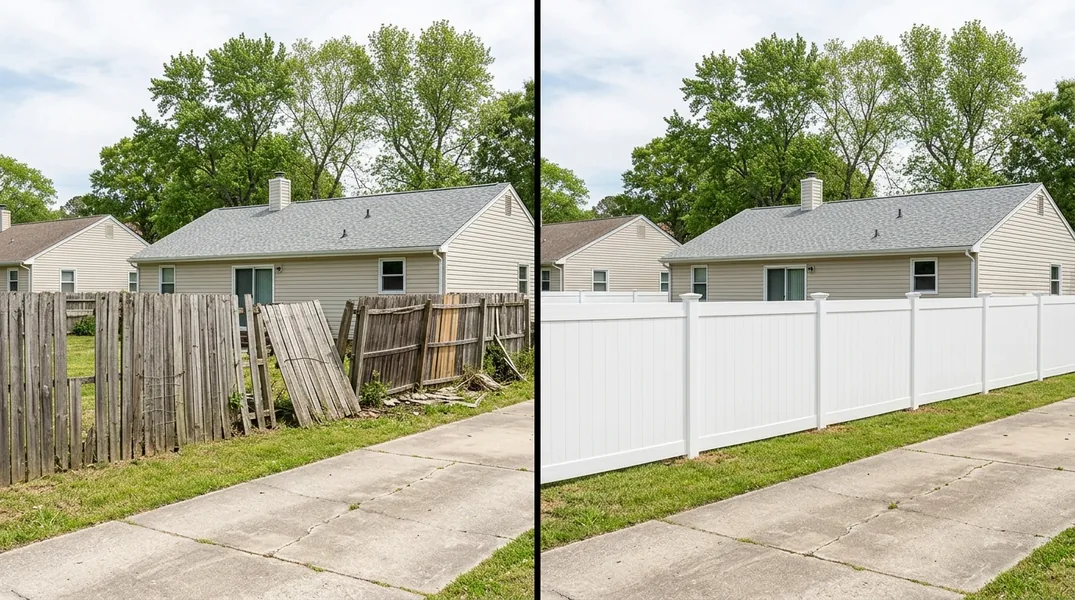
Salt air accelerates wood deterioration through a process called corrosion and decay. The salt deposits settle on the wood surface and, combined with moisture and temperature fluctuations, penetrate the grain and break down the wood's cellular structure. Without proper maintenance, a wood fence in coastal Virginia can show signs of rot, splintering, and discoloration within 3 to 5 years. This means regular sealing or staining (typically every 1 to 2 years), prompt repairs, and vigilant inspections become non-negotiable parts of fence ownership.
That said, certain wood species perform better than others in coastal environments. Pressure-treated lumber, cedar, and redwood offer greater salt air resistance than standard pine. If you're committed to the wood aesthetic and willing to invest in maintenance, a professionally installed wood fence can last 10 to 15 years in coastal conditions. The key is choosing the right wood species and working with experienced installers who understand coastal challenges.
Vinyl vs Aluminum Fence: The Low-Maintenance Contenders
When homeowners ask about vinyl vs aluminum fence options for coastal properties, they're often weighing convenience against performance. Both materials are manufactured to resist corrosion and require minimal maintenance compared to wood, but they solve the salt air problem in different ways.
Vinyl fencing is made from PVC plastic that doesn't absorb moisture and won't rust or rot. It resists salt spray better than wood and requires only occasional cleaning with mild soap and water. The material won't splinter, crack from UV exposure (high-quality vinyl includes UV inhibitors), or need sealing. For many homeowners seeking a set-it-and-forget-it solution, vinyl's low maintenance appeal is powerful. However, vinyl can become brittle in extreme cold and may fade slightly over 10 to 15 years of coastal sun exposure. It's also more expensive upfront than wood but typically costs less over its lifetime when you factor in zero maintenance.
Aluminum fencing offers a sleek, modern alternative that's lightweight and corrosion-resistant by nature. Aluminum doesn't rust in the way steel does, making it naturally suited to coastal salt air environments. It requires minimal maintenance, won't rot or splinter, and can be powder-coated in various colors for aesthetic flexibility. The trade-off is that aluminum is less private than wood or vinyl (it's typically open-style ornamental fencing) and may dent if struck with force. For homeowners prioritizing durability and a contemporary look over complete privacy, aluminum is an excellent choice.
Both vinyl and aluminum outperform wood in salt air resistance and maintenance demands. The choice between them often comes down to your aesthetic preferences, privacy needs, and budget constraints.
Best Fence Material for Coastal Virginia: A Direct Comparison
So which is the best fence material coastal homeowners should choose? The honest answer depends on your priorities. If aesthetic appeal and warmth matter most, and you're willing to commit to regular maintenance, wood remains a viable option. If you want maximum durability with minimal upkeep, vinyl or aluminum are superior choices. If you desire a modern, elegant appearance with excellent corrosion resistance, aluminum takes the lead. If you want the broadest appeal, ease of maintenance, and proven longevity in salt air, vinyl is hard to beat.
Consider your lifestyle and budget realistically. A wood fence demands your attention year after year. Vinyl requires almost none. Aluminum sits in the middle, offering durability without the maintenance burden of wood, though it sacrifices privacy for openness. In terms of salt air performance, vinyl and aluminum win decisively. Both will outlast wood by 5 to 10 years in coastal conditions, even with wood's best species and maintenance practices.
The investment in quality materials and professional installation pays dividends. A poorly installed fence of any material will fail faster than a well-built one. Virginia Beach Fence Company has installed thousands of fences in coastal environments and understands exactly how each material performs when salt air is a factor. Whether you're leaning toward wood for its classic appeal or considering vinyl or aluminum for their durability, professional guidance ensures you get the right solution for your property.
Wood & Privacy Fence Installation Cost in Virginia Beach: What to Budget
Budget is often the deciding factor when homeowners choose between fence materials. Understanding the true cost, including installation and long-term maintenance, helps you make a financially sound decision.
Wood fence installation typically has the lowest upfront cost, ranging from $15 to $30 per linear foot for materials and labor, depending on wood quality and fence height. However, this is where the cost advantage ends. Factor in sealing or staining every 1 to 2 years (averaging $200 to $500 annually for a 100-foot fence), repairs from salt air damage, and eventual replacement, and the total cost of ownership climbs significantly over 10 to 15 years.
Vinyl fencing costs more upfront, typically $20 to $40 per linear foot installed, but maintenance costs are nearly zero. You might spend $50 to $100 annually for occasional cleaning, but that's it. Over 15 to 20 years, vinyl's total cost of ownership is often lower than wood's, despite the higher initial investment. Aluminum ornamental fencing falls in a similar range, $20 to $35 per linear foot, with similarly low maintenance costs.
For a detailed estimate tailored to your property and material choice, Virginia Beach Fence Company recommends requesting a free estimate. Our team can walk you through the costs of each option and help you understand the real financial picture over the fence's lifespan. Call us at (757) 563-1304 to discuss your project and get specific pricing for your needs.
Making Your Decision: Professional Guidance for Coastal Homeowners
Choosing a fence material for a coastal property is a significant decision that affects your home's curb appeal, privacy, maintenance burden, and budget for years to come. While vinyl and aluminum offer superior salt air resistance and low maintenance, wood remains a valid choice if you prioritize aesthetics and are prepared for regular upkeep. The key is making an informed choice based on your specific situation, not assumptions or trends.
Virginia Beach Fence Company has decades of experience helping homeowners navigate these decisions. We understand how salt air affects each material, which installation techniques maximize longevity, and how to match your preferences with realistic maintenance expectations. Whether you're interested in Vinyl & PVC Fence Installation, the durability of Aluminum & Ornamental Iron Fencing, or the classic appeal of Wood & Privacy Fence Installation, we're here to help.
Don't let confusion about vinyl vs aluminum fence options or concerns about wood fence salt air resistance delay your project. Contact Virginia Beach Fence Company today at (757) 563-1304 or visit our website to request a free estimate. Our team will evaluate your property, discuss your priorities, and recommend the best material for your coastal home. Your ideal fence is just a conversation away.
Looking for a professional tree service in Virginia Beach? Virginia Beach Fence Company responds fast for all your fence needs.
Get a Free Quote